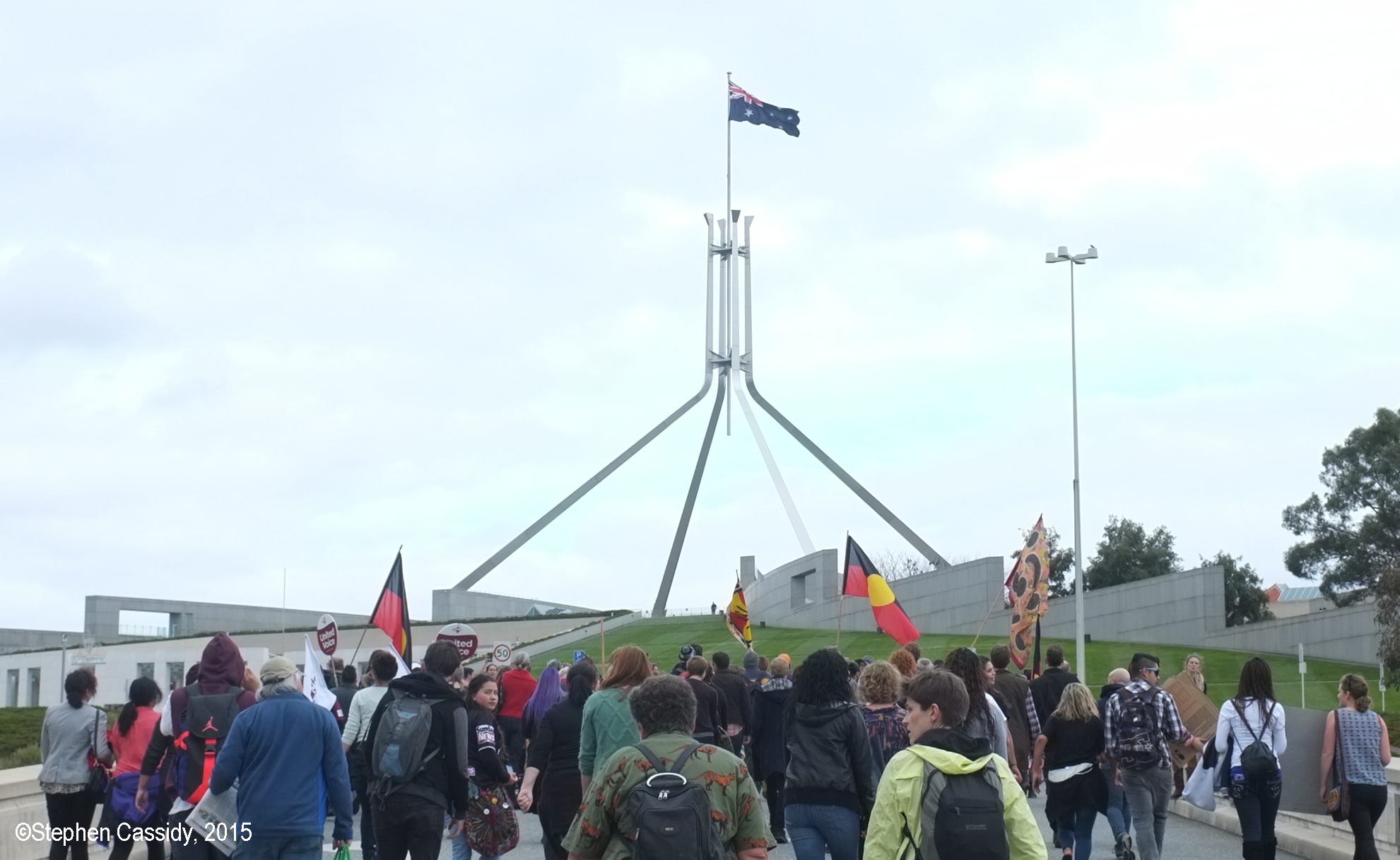
I’m still shocked by the marches and rallies around the country opposing immigration. Everyone involved says mass immigration, but it’s clear in practice they mean most immigration – and definitely all immigration by people who aren’t white, or as I like to say, ‘pink’. Here I am travelling through my own homeland once again and, at times, it seems like a foreign country – not because of immigrants but because of those who have grown up here. Those taking part in these marches probably have genuine grievances, but they have picked the wrong target to blame and, in the process, have been steered into becoming in effect neo-Nazi fellow travellers. We are (almost) all immigrants here, only just starting to genuinely come to grips with this country.
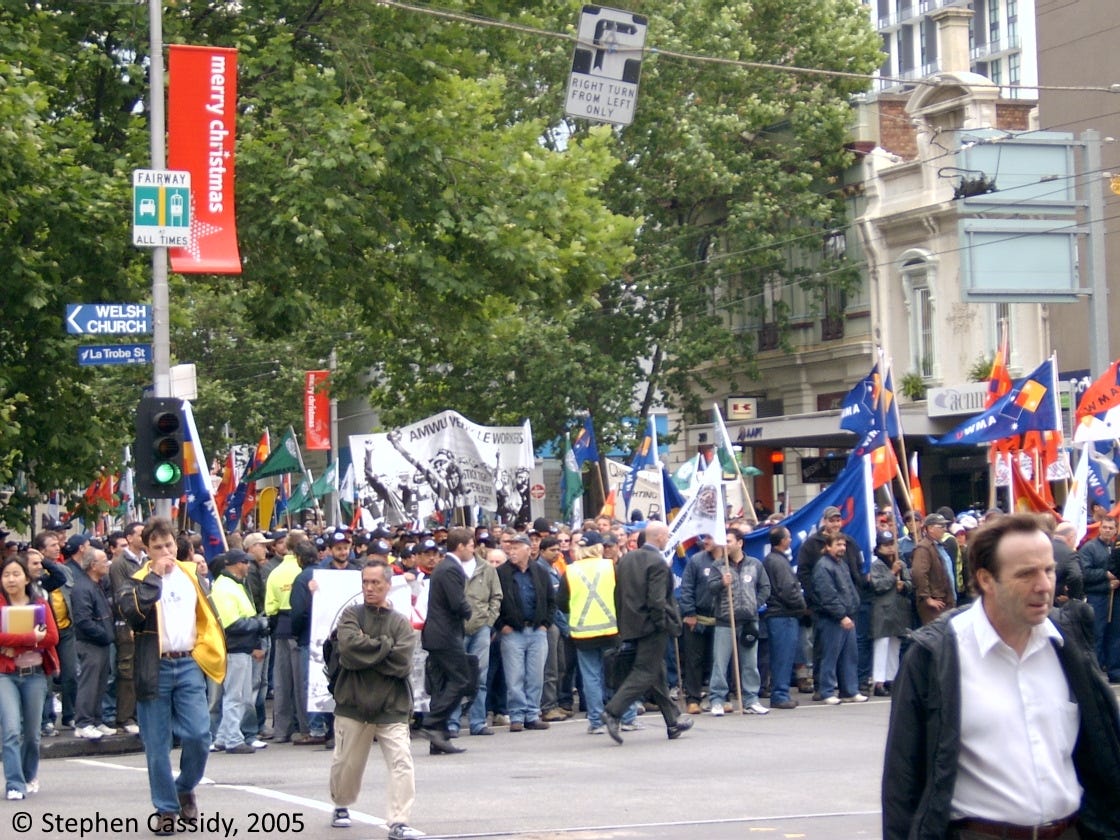
What is interesting, and heartening, is that – apart from the Nazis, who don’t want any immigration – no-one else wants to publicly oppose immigration completely. No-one seems too keen to be publicly associated with organising the events either. It’s clear that those involved sense that the whole thing could easily be on the nose.
Shocked by neo-Nazi fellow travellers
It’s been a little while since the marches, but I’m still shocked – but why am I surprised? As I repeatedly say Australia is not one country, but two – both parts going in opposite directions, one into the past and one into the future. I’ve written about this in more detail on my ‘indefinite article’ blog, which I describe as ‘irreverent writing about contemporary Australian society, popular culture, the creative economy and the digital and online world – life in the trenches and on the beaches of the information age.’
Unfortunately for the Nazis, they are really on a hiding to nothing – neither the world (nor Australia) is that 'white' and it’s getting less so every day. When China and India really come into their own, watch out. We could easily become no more than a largely irrelevant backwater, hankering for a non-existent past, like the UK is right now.
'Unfortunately for the Nazis, they are really on a hiding to nothing – neither the world (nor Australia) is that 'white' and it’s getting less so every day. When China and India really come into their own, watch out. We could easily become no more than a largely irrelevant backwater, hankering for a non-existent past, like the UK is right now.'
Who cares about this? Pauline Hanson once moved a motion in Parliament House that 'it was okay to be white'. Does it get any more laughable? In a list of the major existential threats the world needs to be afraid of – and pulling together to deal with
When band of brothers meant something
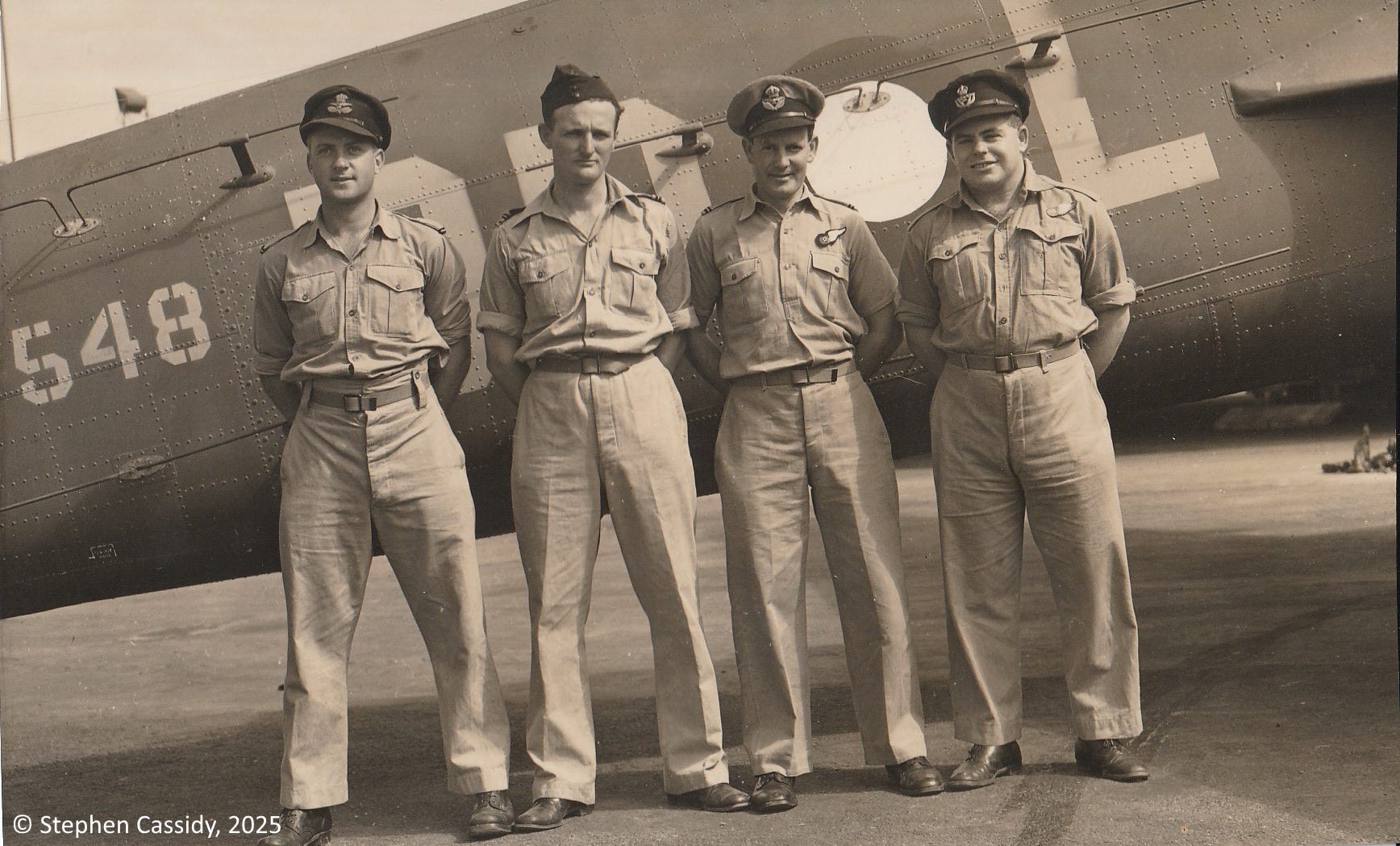
I keep reflecting that five of my uncles fought the Nazis in World War 2, on torpedo boats, Lancaster bombers and freezing convoys round the top of Norway – luckily they all survived, but many of their friends did not. I don't want us – or our children – to have to refight that war. My father-in law was conscripted into the German Army. He said ‘I've had enough of armies’.
One of my uncles was a navigator on the Lancaster bombers that fire-bombed Dresden. My mother-in-law was staying with relatives on the outskirts and watched as the city burned. Here's to never revisiting that horror and that evil and to there being no guarantee of freedom of speech for the sworn enemies of freedom of speech. The people lurking behind (and sometimes in front of) this are as un-Australian as it gets.
Hanging around like a bad smell‘I keep reflecting that five of my uncles fought the Nazis in World War 2, on torpedo boats, Lancaster bombers and freezing convoys round the top of Norway – luckily they all survived, but many of their friends did not. I don't want us – or our children – to have to refight that war.’
Our noisy pseudo-Nazis (or real Nazis) complain about migrants taking their jobs, but from what I could see from the remnants of the so-called Convoy to Canberra, who hung around Canberra like a bad smell for years afterwards – some of them still here, their rusting pickup trucks parked in out of the way public reserves – many of them seem to be sad loners, who must be surviving on benefits from the welfare state they despise. They seemed to be good at tearing masks off people or breaking elderly people’s wrists, but not much else.
I keep thinking of two pieces of useful advice I picked up somewhere along the way. ‘If you don’t have something nice to say, don’t say anything’ and ‘it’s better not to say anything and risk people people thinking you are a fool, than to open your mouth and confirm it's true’.
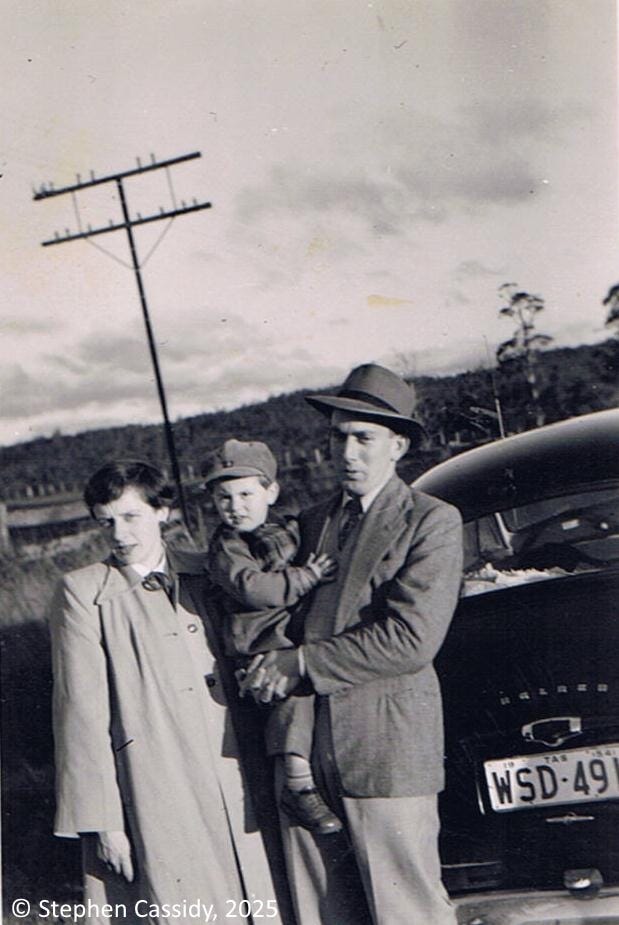
I suppose I’ll just get on with being nice to people, neighbourly not nasty, saying hello to strangers, helping elderly people (other than me) across the street – all the things I learned from my parents. That’s why people liked them. According to reports, the Tasmanian counter-protestors against the march sang the INXS song ‘Never tear us apart’ back at the marchers. In Canberra I’m pleased to say, only a thousand people turned up – and two of them were dodgy politicians who were being paid to be there.
‘I suppose I’ll just get on with being nice to people, neighbourly not nasty, saying hello to strangers, helping elderly people (other than me) across the street – all the things I learned from my parents. That’s why people liked them.’
In any city at any time I would guarantee I could find a thousand people who were unhappy with anything you choose to name. Other cities were less encouraging of cultural difference, though. Canberra has a higher level of education and of political literacy than most parts of the country, so that helps in seeing through the rhetoric. As a result of that and many years of being up far too close to hopeless governments (often because we have worked for them), many of us do actually have that mythical and rare Australian bullshit meter that everyone talks about enthusiastically with scant evidence.
Walking with ghosts
‘Increasingly people I have known for a long time seem to be dying. In fact my generation is steadily starting to disappear. Who is replacing them? We shuffle along in a world that is unravelling, a world – that for both good and bad – our generation gave birth to. We are teetering in a strange balance between building on the achievements of the past and desperately trying to dismantle them. In many countries, the current generation is poorer than the previous one, upending generations of dreams by working class parents and migrants for a better life for their children. In this time of upheaval – both welcome and unwelcome – creativity is needed like never before’, Walking with ghosts.
I'm on the road again – well, on the rails again. On Monday I caught the slow train from Canberra to Sydney, and today I’ve woken up to a third morning in Surry Hills. I’m enjoying the days in Sydney – after all, I did live here for twelve and a half years. I’m mainly here to see the Yolngu Power exhibition at the Art Gallery of NSW, which finishes next week, but I’m also using the trip to see to other business’, On the rails again – a trip about the past and the future.
‘I see the latest report on looming climate change has some pretty dire predictions – like a future of four times the length of heatwaves, up to five times as many deaths due to extreme heat, a massive drag on productivity, 1.5 million Australians at risk of coastal flooding and a potential half trillion dollar hit to property values by 20250 – and that’s just the good news’, Looking down on dire predictions.
‘From time to time my posts on ‘travelling light’ include references to restaurants we have eaten at or enjoyable places we have stayed. However, most of my regular writing about food, produce, restaurants and places we have stayed is on one of my blogs, tableland, which I describe as: ‘Food and cooking land to table – the daily routine of living in the high country, on the edge of the vast Pacific, just up from Sydney, just down from Mount Kosciuszko’, Essen, trinken, tanzen – aber nicht rauchen.
‘In winter my mind turns to food, but since it is never turned away from art, cooking and looking manage to fill in the cooler months – or maybe that’s all months. I haven’t made hand-made pasta for a while but I have made sushi and sashimi – though only once in recent memory – as I resurrect all my food traditions. Cooking, eating and cruising around art exhibitions – that’s winter for me’, Cooking minestrone in an art gallery - pineapple fruit cake, hot soup and art on a cold day


